Carrot and stick measures needed to improve rural health delivery

October 14, 2021


KENNEDY MP, Bob Katter, says ‘carrot and stick measures’ are needed to improve rural and regional health delivery, including increased bulk billing rebates for rural and regional general practitioners (GPs) based on remoteness, and incentives and directives to attract Australian-trained and foreign doctors to the regions.


The Katter’s Australian Party (KAP) MP presented these ideas in a written submission to the Senate Inquiry into the provision of general practitioner and related primary health services to outer metropolitan, rural, and regional Australians.


Mr Katter who has been in state and federal politics for nearly 50 years said the fight to maintain an adequate health workforce in North Queensland had been a constant battle.


“Half my term in office was spent fighting for a North Queensland medical school, which we got at James Cook University (JCU),” he said.


“Our kids previously went to Brisbane’s University of Queensland, and they never came home. Townsville’s JCU has been turning out over 200 Doctors a year now for 15 years and yet our doctor shortages are higher now - even though in theory we’ve trained 3000 extra doctors locally.


“There are now the doctors available but serious carrot and stick measures are needed if they are to move into and remain in country areas.”


Mr Katter has been working with many GPs in his electorate including Dr Rod Catton (Innisfail), Dr Grant Manypenny (Mareeba), and Dr Lisa Fraser (Gordonvale) who between them have over 100 years’ experience at the coal face on this issue.


Mr Katter said the Federal Government had attempted to make rural and regional practices more viable by introducing a progressive incentive schedule that increases bulk billing payments for doctors working in remote areas and rural towns.[1]


Previously, metropolitan areas received a bulk billing incentive (BBI) of $6.40 per patient, and “rural” areas revived a BBI of 150% the metropolitan area rate, $9.65 per patient.


As of January 2, 2022, the rural rate will be on a sliding scale based on remoteness. Cairns and Townsville will continue to get 150%. The towns of Mareeba, Atherton, Innisfail and Charters Towers will now receive a BBI of 160% ($10.24), Yungaburra, Malanda and Ingham will receive a rate of BBI rate of 170% ($10.88), Mount Isa and Cloncurry a BBI rate of 180% ($11.52), and most of the western sections of the Kennedy electorate a BBI of 190% ($12.16).

Mr Katter said the policy was a step in the right direction but the bulk billing incentive rates needed to be increased further to make a difference.


“This modest increase however, according to the multiple doctors in my electorate who we have spoken to, will make only the slightest difference to their practices,” he said.


“It does not alter in a meaningful way the dire situation they find themselves in.”


The Senate Standing Committees on Community Affairs is expected to release its findings from the Inquiry in March 2022.


-ENDS- 

[1] https://www.health.gov.au/sites/default/files/documents/2021/05/guaranteeing-medicare-better-targeting-the-rural-bulk-billing-incentives.pdf


By Kahla Kruger September 7, 2026
Katter hosts public meeting to fight for fair representation
By Dominique Moon August 23, 2026
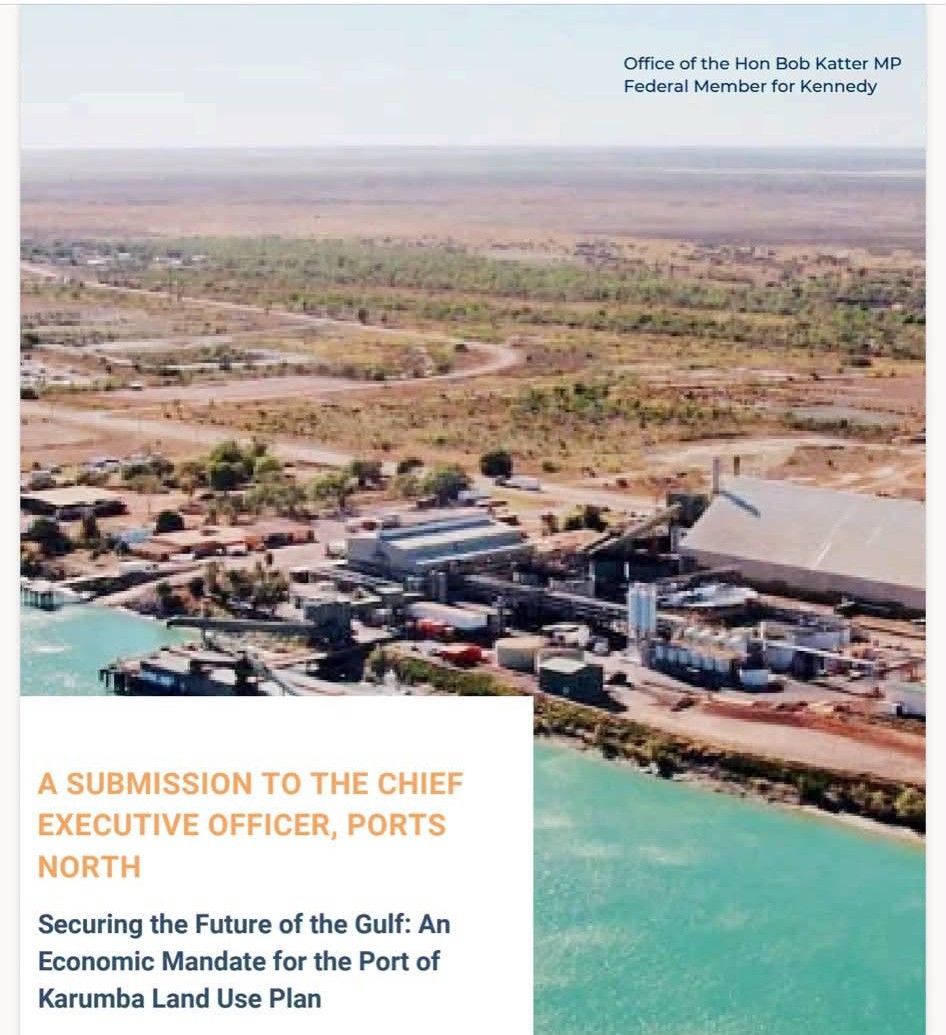
The Port of Karumba serves as the primary maritime gateway for the Gulf of Carpentaria, providing key access between our southern states and the essential Asian markets and beyond. The port is a stones throw from the North West Minerals Province, vast untapped volumes of fresh water, rich soils and our northern regional agricultural sectors. The future of the port must include serious upgrades to the road network that connect it these vital resources and the rest of Australia. This submission advocates for not only broad consideration of port access and users, but also for key Inland road networks to be placed on the National Land Transport Network (NLTN) to unlock long-term, ongoing Federal funding.
By Dominique Moon August 20, 2026
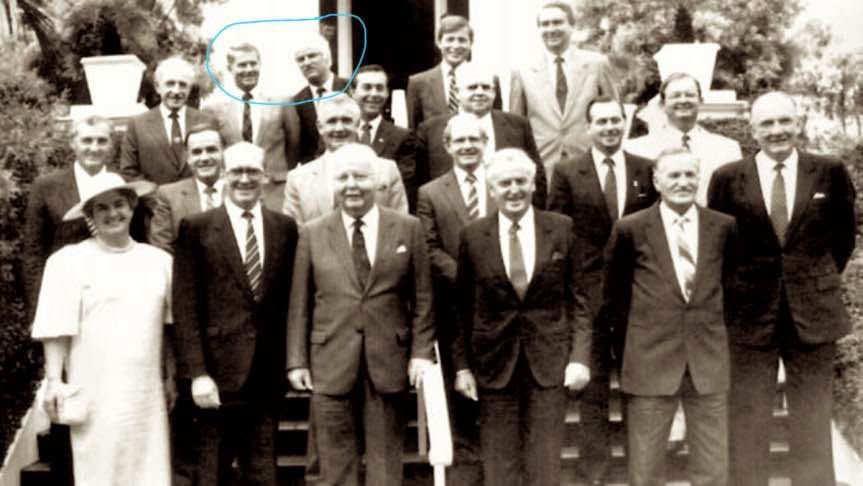
One of my two closest friends in Parliament, Vince Patrick Lester OAM (1939-2026) was the classical underdog in every sense of the word. Brought up by his struggling mother, the bell boy and a baker’s apprentice with no secondary education was the kid born with nothing. Vince was an extraordinary MP consistently delivering for his electorate – whether it be the Great Inland Highway or a local community centre. Every Australian should be inspired by Vince Lester – Always polite, never arrogant. Always fighting for the little people. May God’s blessings be upon Vince – a good bloke. Bob and Vince Lester pictured with the 8th Bjelke-Petersen Cabinet.
By Dominique Moon August 20, 2026
This is a subtitle for your new post
By Dominique Moon August 20, 2026
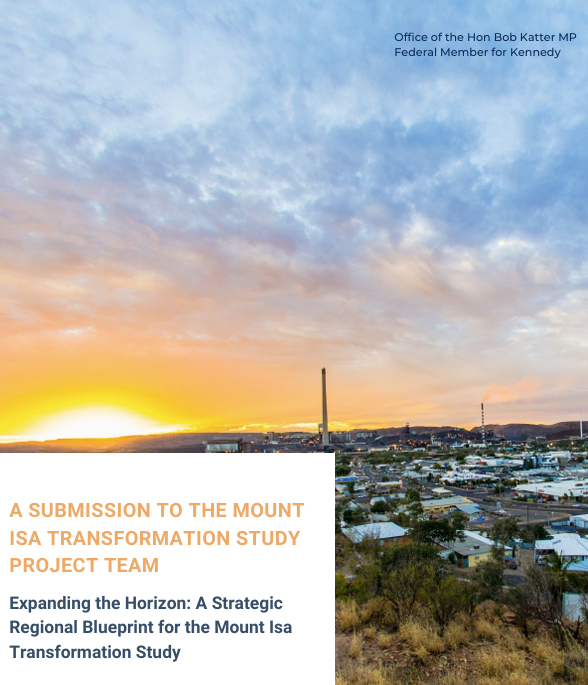
The “Isa” is Australia’s economic future. Surrounded by one of the world’s richest minerals province, rich pastoral lands and within a region of north Australia that has access to nearly half of Australia’s surface water - the ‘Isa’ is destined for big things. However, infrastructure is needed to unlock this vast wealth and opportunity. Bob’s submission to Mount Isa Transformation Study highlights these opportunities and outlines some of the key infrastructure requirements.
By Dominique Moon August 18, 2026
Today we honour the Australians who served during the Vietnam War. We remember those who made the ultimate sacrifice, those who returned home carrying the scars of their service, and the families who stood beside them. For many Vietnam veterans, the recognition and respect they deserved was far too long coming. Today, we say thank you for your service, your courage and your sacrifice. Lest We Forget.
By Dominique Moon August 17, 2026
Throughout Australia our Post Offices aren’t just a luxury… for many, they are essential. Often they are the heart, soul and lifeblood of our country towns. A Senate Committee is currently looking at the future of our post offices - we’ve put in a submission highlighting the integral role of our post offices, fighting to ensure they remain open across Australia and continue to provide this vital service. To all the posties out there… thank you for keeping us connected.
By Dominique Moon July 15, 2026
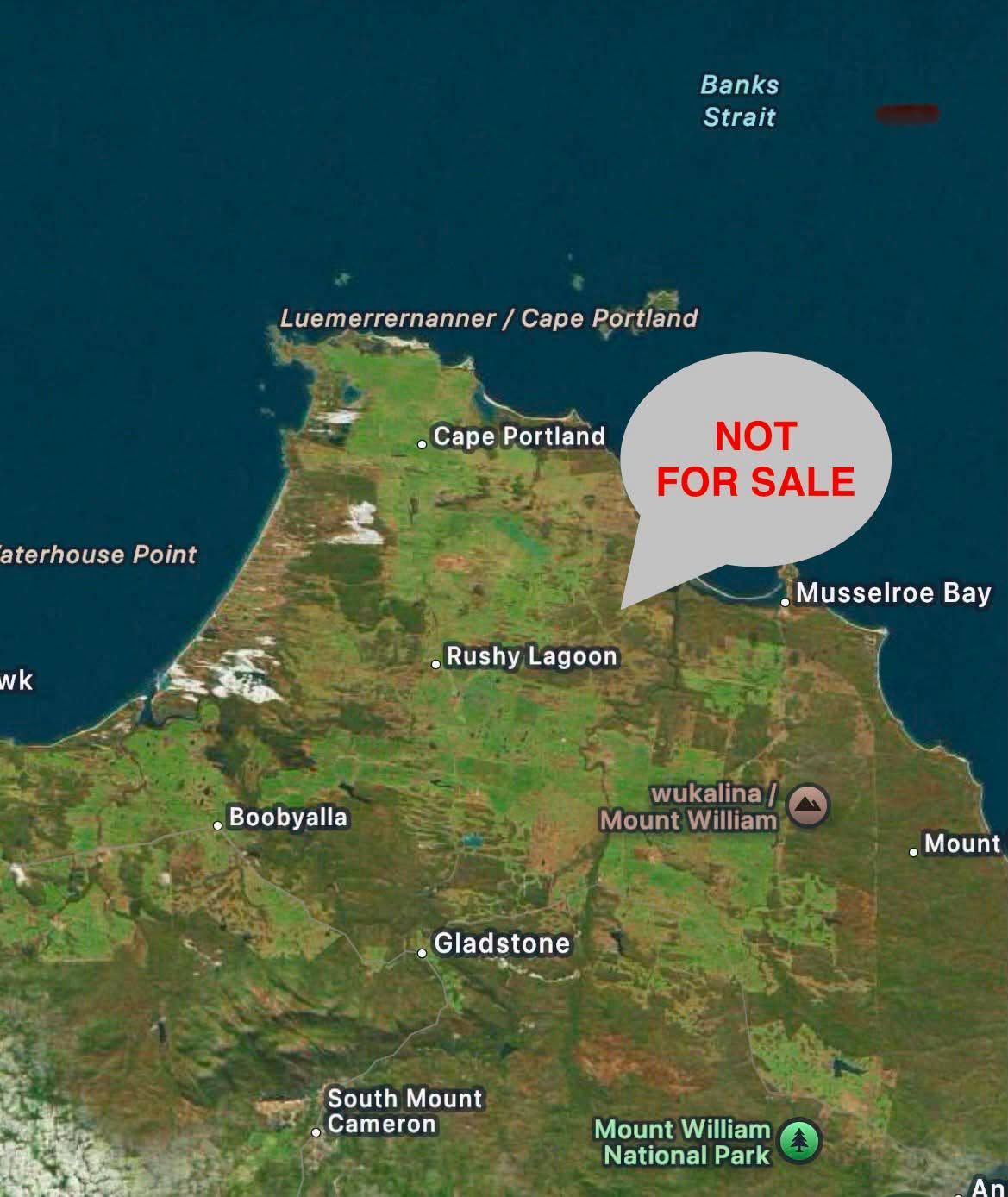
Is government seriously that tone deaf that it would permit the sale of 22,000 hectares of prime agricultural land to foreign investors????? UNFORTUNATELY .. the answer is YES . Our government has allowed the sale of a huge “Rushy Lagoon” property in Tasmania. THIS PROPERTY is roughly one-and-a-half times the size of Washington, D.C. (17,700 ha), and would fit roughly 30,800 international soccer pitches. THIS PROPERTY at capacity runs 85,000 DSE dairy and beef cattle. THIS PROPERTY employs hundreds of locals and supports the entire economy of the towns throughout the region. THIS PROPERTY is key to the sustainability and self-sufficiency of Australia’s domestic beef and milk markets. The INTERNATIONAL PURCHASERS want to turn it all into a “pine farm” - sacking staff and destroying the local economy, but also depriving Australia of the agricultural and wealth generation that comes with such a large agricultural enterprise. Ignoring the pleas from locals, government has rubber stamped the sale. AUSTRALIA WE MUST WAKE UP!!!! WE MUST FIGHT AGAINST FOREIGN LANDLORDS!!!! IT MIGHT NOT BE HAPPENING IN YOUR BACKYARD NOW…. BUT IT WILL BE SOON!!! AUSTRALIA IS NOT… AND SHOULD NEVER BE… FOR SALE!!!!
By Elise Nucifora July 8, 2026
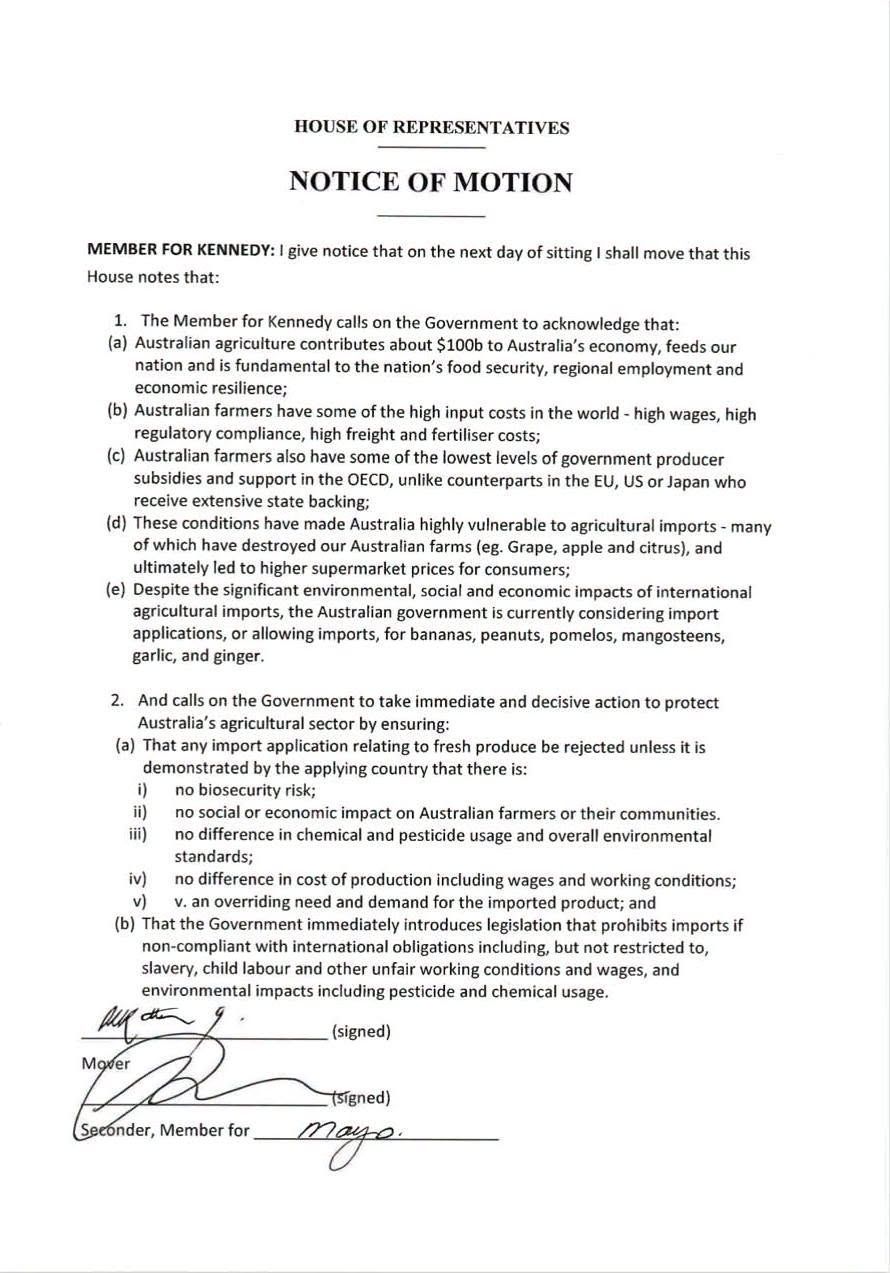
8 July 2026: North Queensland Member for Kennedy Bob Katter has demanded the Federal Agriculture Minister make public the “deeply concerning” findings of Government investigations into imported peanuts for Australian farmers “who every right to know whether their industry has been exposed to a biosecurity threat”. After meeting with the Federal Minister in Canberra last week, Mr Katter has formally requested in writing the Department of Agriculture’s full transparency on the results of investigations, alongside an immediate halt to peanut imports where Australia's biosecurity cannot be guaranteed. "Australia has strict biosecurity rules for a reason. They exist to stop dangerous pests and diseases getting into this country before they destroy Australian agriculture," said Mr Katter. "However, having been advised by the Minister last week of intensive investigations into imported peanuts – including the germination testing of particular significance – my office has now received evidence confirming germination of the samples collected for laboratory testing… which raises very serious questions because if peanuts can germinate, they are raw.” Mr Katter said the results indicating germination in all peanut varieties tested had raised fears imported peanuts are not undergoing necessary processing to eliminate raw biosecurity threats. "The Australian peanut industry is rightly worried about diseases that simply do not exist here – such as the devastating peanut smut in overseas crops which, once established, slashes yields by up to 75 per cent. Once these diseases are in Australian soil, there’s no magic wand to get rid of them." Mr Katter said reports the imported raw peanuts were being offered for sale nationwide reflected the extent of the potential national biosecurity risk “that we've seen again and again and again... We warned governments not to allow imported prawns because white spot disease would get in. We were ignored, and white spot came in. We warned about citrus canker. We warned about black sigatoka. We warned about papaya fruit fly. We warned about Panama disease. “If you believe governments have the best interest of Australian farmers at heart, then you believe in the tooth fairy – while they continue to gamble with Australia's biosecurity and food security to look after their precious ‘free’ trade agreements.”  Mr Katter said where there was genuine uncertainty about whether imported peanuts complied with Australia's biosecurity requirements, “they should not be coming into this country until that uncertainty is resolved. You don't wait until the disease arrives, before you lock the gate." ENDS
By Kahla Kruger July 1, 2026
KAP Federal Member for Kennedy Bob Katter has welcomed the completion of the sale of Phosphate Hill, celebrating it as a major win for North West Queensland workers, industry and the future of Australian fertiliser production. Mr Katter said the announcement represented the culmination of years of relentless campaigning to keep one of Australia's most strategically important industrial assets operating. "This is wonderful news for North West Queensland," Mr Katter said. "For years we've been bashing the doors down, that if Australia wanted to keep industry alive, governments had to step in and secure a future for assets like Phosphate Hill." Mr Katter said the federal government’s Reserve Resource Policy had been instrumental in helping create the conditions for the sale. "Getting a Reserve Resource Policy in place has been one of the major achievements of my political life. We fought tooth and nail because Australia should never be paying world-leading prices for our own gas. "Our competitors in countries like the United States and Russia have access to affordable energy, while Australian manufacturers have been paying more than $16 a unit for gas.” Mr Katter said affordable gas was fundamental to the survival of the North West's industrial base. "Everything at Phosphate Hill depends on gas. It powers the plant and drives the chemical processes that turn our natural resources into the fertiliser. "Only a year or so ago we were staring down the barrel of losing one of Australia's biggest industrial centres, with the closure of copper and phosphate production threatening thousands of livelihoods across the North West. "This is an enormous relief for the workers, contractors, families and communities who never gave up. "I particularly want to thank the people of North West Queensland who stood together and fought for this outcome. They refused to accept that these jobs should disappear, and today their determination has been rewarded." Mr Katter said the focus must now be on ensuring Phosphate Hill has the affordable energy certainty needed to remain strong operation for decades to come.  -ENDS-