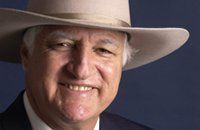
Gee and Katter launch plan to protect Australia's prime agricultural land
April 17, 2025
Independent Federal Member for Calare, Andrew Gee, and Independent Member for Kennedy, Bob Katter, have announced a major new push to protect Australia’s most productive farmland, warning that without urgent action, vital agricultural land will continue to be lost to development and changing land use.
If re-elected, the pair will introduce legislation, titled the Protecting Australia’s Prime Agricultural Land Bill, to safeguard Australia’s prime agricultural land, ensuring it remains dedicated to producing food and fibre for Australia and the world.
Mr Gee said the need for action was clear, with urban expansion, explosion of lifestyle blocks, infrastructure and large-scale industrial projects rapidly consuming prime-quality farmland.
“Food security is a key part of our national security. As the population of the world increases, food security is going to be a critical global issue and may even be a source of future conflict. It’s fundamental to the ongoing success and prosperity of our nation,” Mr Gee said.
“Once prime agricultural land is gone, we can’t get it back. It’s a strategic national resource. You can’t grow food once the land is covered in concrete.”
For the Central West, Mr Gee said the legislation would help secure the region’s agricultural and economic future.
“This is about protecting the land that’s sustained our communities for generations,” he said. “This Bill backs our farmers, protects local jobs, and keeps the Central West one of Australia’s most vital food-producing regions.”
Mr Katter said “The French and the European Union have said, ‘if we remove the farmers, we have no one to look after the land’.
“Without farmers, the land turns into fire starters, feral pig pens and weed nurseries.
“Farms are carbon absorbers. Take sugar cane for example, in a 12-month period a vacant field becomes solid CO2 absorbing biomass. A hectare of sugar absorbs 50 tonne of CO2.
“If we lock agriculture out of our best grazing and food producing country then we will turn this nature wonderland into urban streets and industrial developments.
“This bill gives the farmer the power to say, “bugger off.”
The Protecting Australia’s Prime Agricultural Land Bill will ensure that prime agricultural land is preserved for agriculture while giving farmers agency and control over their land.
The centrepiece of the policy will be farmers deciding how their land is used, not governments or anyone else. It would mean that people buying rural properties containing prime agricultural land would have to use that land for agriculture.
It will take a strategic and nationally coordinated approach to supporting farmers’ rights to use and manage their land productively and ensure land use decisions do not undermine Australia’s future agricultural capacity and security.
ENDS

To bring in laws for an Artificial Intelligence (AI) 'Kill Switch', I voted with my crossbench colleagues, Andrew Gee MP and Dai Le. The Government shut us down. AI... It's been baffling me for a while now how people are taking me off on social media! Last week, I saw a video of me on that Dating Game television show from the 80s. Sure, it gave me a laugh... but it got me thinking... what else is AI capable of?! Where does it stop? Does it infiltrate the school yard? Our defence force? Our energy grid? Whilst it is astounding that technology is leaping forward, it is also a flashing neon light for danger. Something is seriously wrong when you aren't sure what's real or fake anymore and it is moving too quickly. So a 'Kill Switch' seems like a pretty sensible thing to me. It was disappointing that the Government chose to shut the debate down. We lost the vote 89-13. And that is no joke.

Families with the means to enjoy life rather than just survive it? More babies for Australia? Sounds like a pretty good thing to me. But apparently, Jim Chalmers isn’t convinced. I asked the Treasurer about income splitting and backing a new Australian baby boom... Policies that recognise the real value of unpaid care and reverse our vanishing race. The choice, either way, should be in women’s hands… NOT the Treasurers. Have a listen to his excuses…
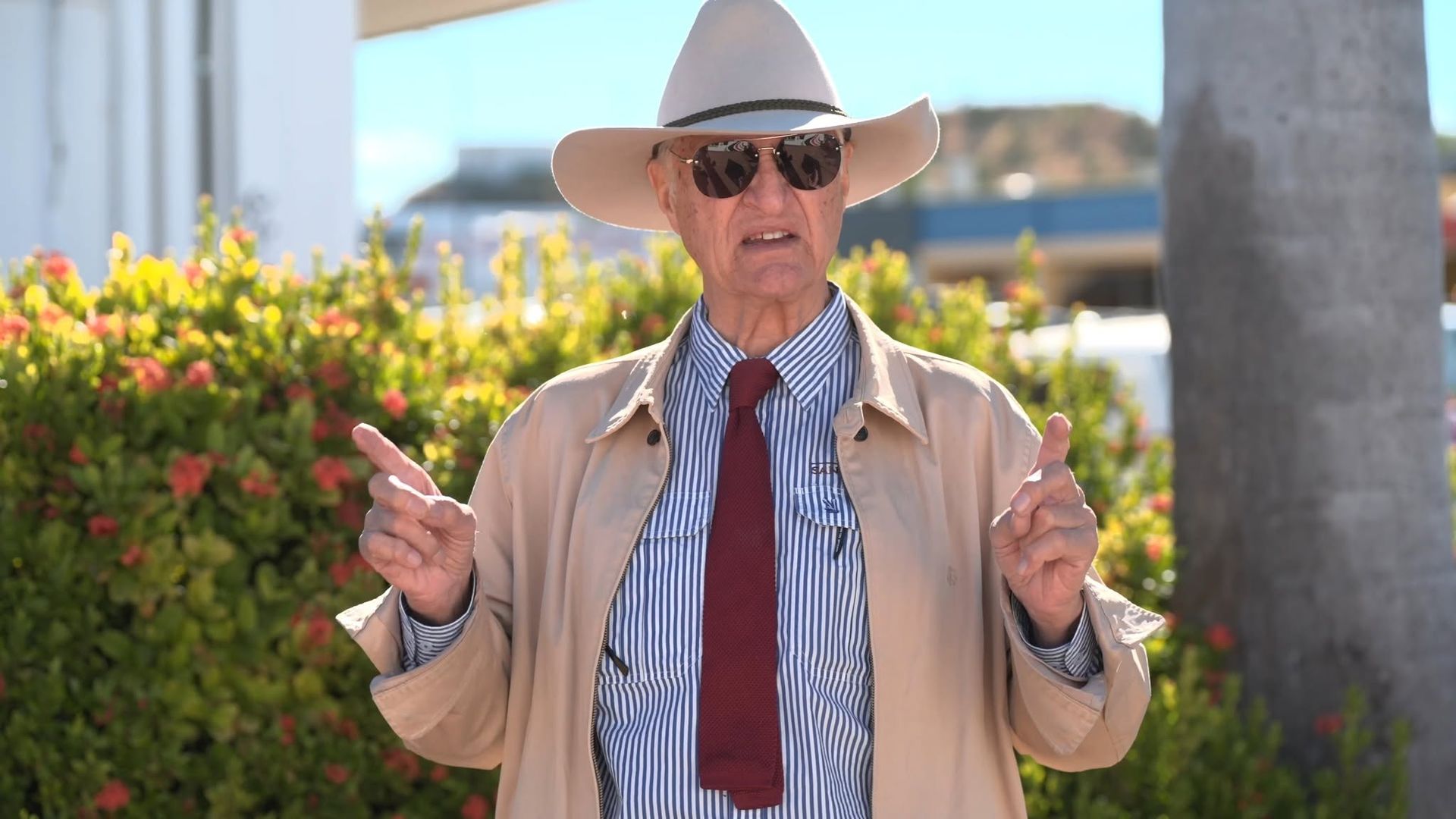
8 September 2026: A bold plan to reverse the plunging birthrate by recognising the value of unpaid care has been rejected by Government in favour of incentivising more working parents of our “vanishing race”, warns the Father of the House of Representatives and North Queensland MP of half-a-century, Bob Katter. In addition to asking for a $75,000 payment per birth, the Federal Member for Kennedy this week asked the Treasurer in Question Time to help families crippled by the cost-of-living crisis with taxable income-splitting to boost disposable incomes for spouses raising children on a single wage by about 10 per cent on average. But instead of acknowledging annual tax relief of about $8000-$10,000 for struggling families with a single wage-earner on $80,000-$150,000 a year – which would boost household budgets between 9-12 per cent 1 – the Treasurer claimed income-splitting would “disincentivise” women’s workforce participation, leaving them “economically dependent” on men, and “cost the budget substantially” to deliver the “lion’s share” of benefits to “higher wealth” families whilst “denying” those in lower tax bands. Mr Katter accused the Treasurer of “throwing the baby out with the bathwater” by dismissing outright the long-overdue “fairer family tax” policy with the introduction of a $75,000 payment for all new mothers “to spend as they see fit – from putting food on the table to investing in superannuation for their future”. “Families cannot make ends meet,” Mr Katter told the Treasurer in reference to average household debt at over $300,000 or $400,000 for under-50s, with the hyper-inflated cost-of-living now crippling 25 per cent of parent couples on a single income who suffered the “appalling inequality at tax time” that leaves a stay-at-home mum and three kids struggling by on $15,000 per person, whilst double-income-no-kids (DINKS) enjoy disposable incomes of $75,000 each. “Surely, family income-splitting makes taxation fairer, whilst a $75,000 birthing payment would help arrest Australia's plunging birthrates,” he pleaded in the Parliament. Mr Katter said the Treasurer’s devaluing of unpaid work further betrayed all parents “who bear enormous responsibility for raising our nation’s future generations to advance Australia fair”. “The Treasurer’s righteous virtue-signalling this week in the Parliament – supposedly on the side of women who quite reasonably want to be paid for their work – in turn infantilises mothers whose endless work for their family remains unpaid, like many carers, when the choice either way should be in women’s hands,” said Mr Katter. “Instead, Australian mums and dads are financially penalised when only one parent is paying income tax – which is really the only productivity measure that the Treasurer truly cares about. “But while he’s crying poor on an estimated $3 billion annual cost of income-splitting to the budget bottom line, he’s spending five times that subsidising the private childcare industry to boast about the benefits for women in the Kennedy electorate who can be on endless waitlists or have zero local early childhood places. “And when you tally the cost to taxpayers of about $14 billion propping up commercial childcare plus another $5 billion a year in parental leave – not to mention an estimated $20 billion in means-tested Family Tax Benefits – it puts into perspective the estimated $22 billion cost of an upfront $75,000 bonus for fewer than 300,000 births a year, to help lift Australia back up to relative post-war boomer rates.” Projections of the compounding benefits of lifting birthrates from below 1.5 to above the 2.1 replacement rate, align with an Australian population reaching 80 million with one million births annually in a century 2 . “I want 80 million people in this country so our industries can operate on economies of scale; so we’re not doomed to repeat the history of ‘a people without land seeking for a land without people’,” said Mr Katter. ENDS
We all know about the thriving illegal tobacco and vape industry. We all know the real causes - failures at our borders and the huge taxes on legal sales. However this issue becomes even more insidious when it is alleged that the criminals behind this trade are state sponsored terrorists organisations. Yes that’s right terrorist groups that have the backing of their country and access to the associated power and government structures. Illegal sales of tobacco aren’t simply lining the pockets of a couple of local crims…… it’s coordinated, professional and scary. Our police on the front line are vulnerable… shop owners exposed and customers preyed on. There is an urgent need to change our system, lower restrictions and cost of legal goods so the element can be quashed. In Wisdom Mongrel Patriot we discuss this and many other key issues relating to the latest laws before Parliament. To watch full episode on YouTube click here To watch full episode on Spotify click here
About 450,000 people enter into Australia each year on student and associated family ‘dependent’ visas. ALL get automatic working rights. No requirement to finish a degree, complete a course Many never leave. Our tertiary education system is being devalued with genuine students penalised by those abusing the visa system. In Wisdom Mongrel Patriot we discuss this and many other key issues relating to the latest laws before Parliament. To view full episode on YouTube click here To view full episode on Spotify click here
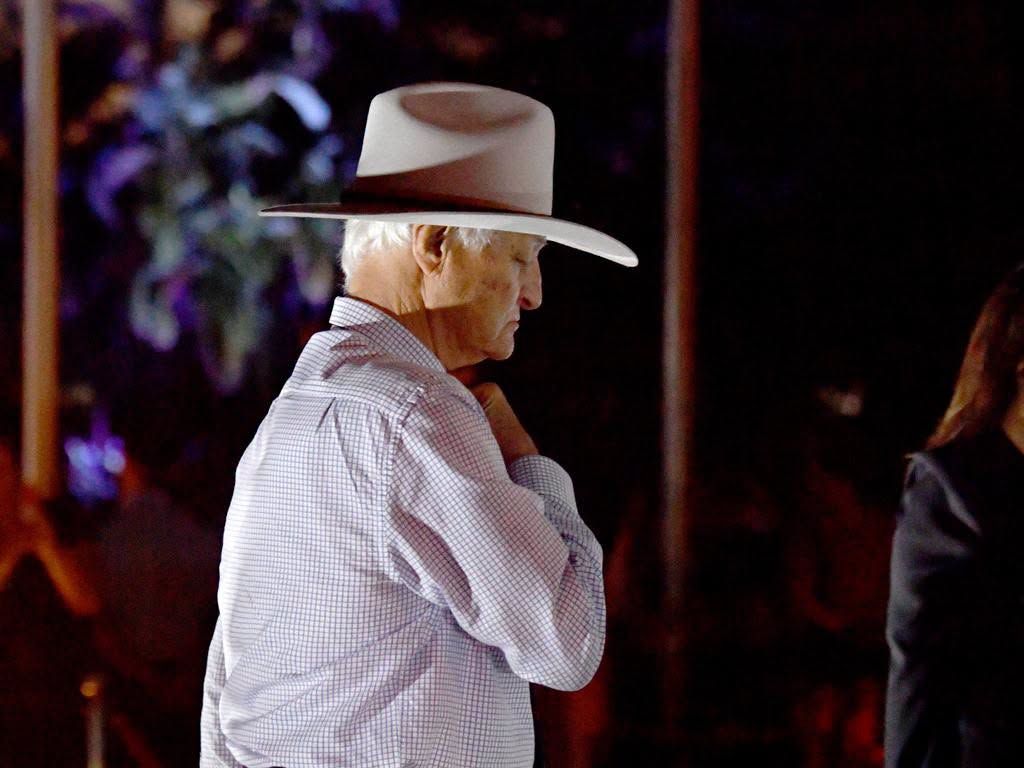
Today in Parliament I supported Andrew Gee MP in his urgent call to roll back rushed gun laws that are smashing local, law abiding businesses and the communities they support.
Yesterday in Parliament Bob spoke on the fact that forced labour and child exploitation occurs all too frequently overseas - in countries like the Philippines big corporations make billions, while workers are exploited and their environment is destroyed. Allowing unwanted and unneeded bananas into Australia doesn’t help these poor communities …. It actually amplifies their pain. We need to stop government ‘cherry picking’ what international agreements it follows, and what it sweeps under the table. “I consider that allowing banana imports into Australia brings an unacceptable disease to our shores….. But it also means that Australia is turning a blind eye to the misery and grief caused by large multinational corporations that exploit vulnerable countries and their citizens. “It is mind blowing that government would allow the importation of a product that we don’t need or want !!!” To watch on Facebook click here
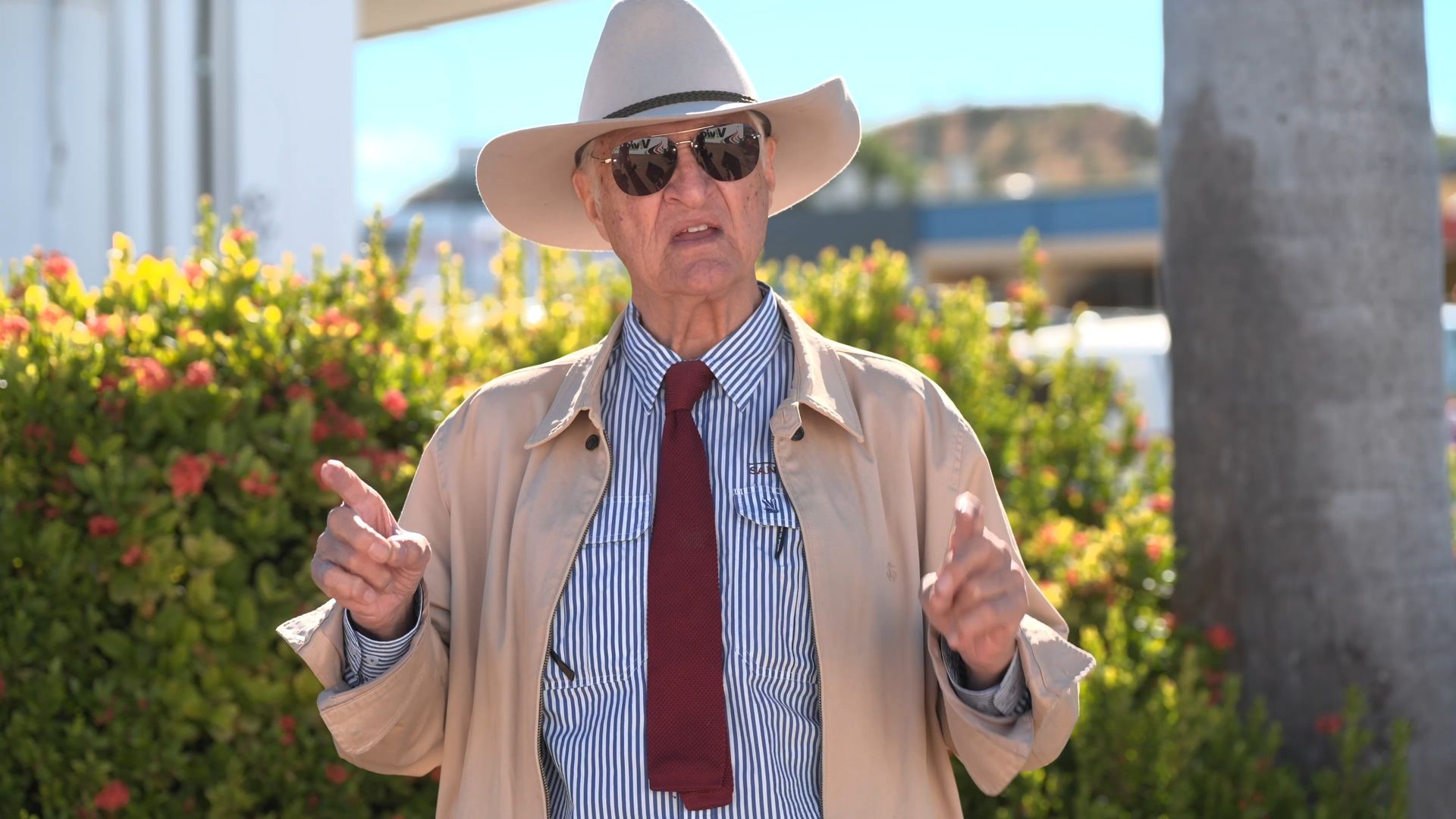
Katter hosts public meeting to fight for fair representation
August 30 2026
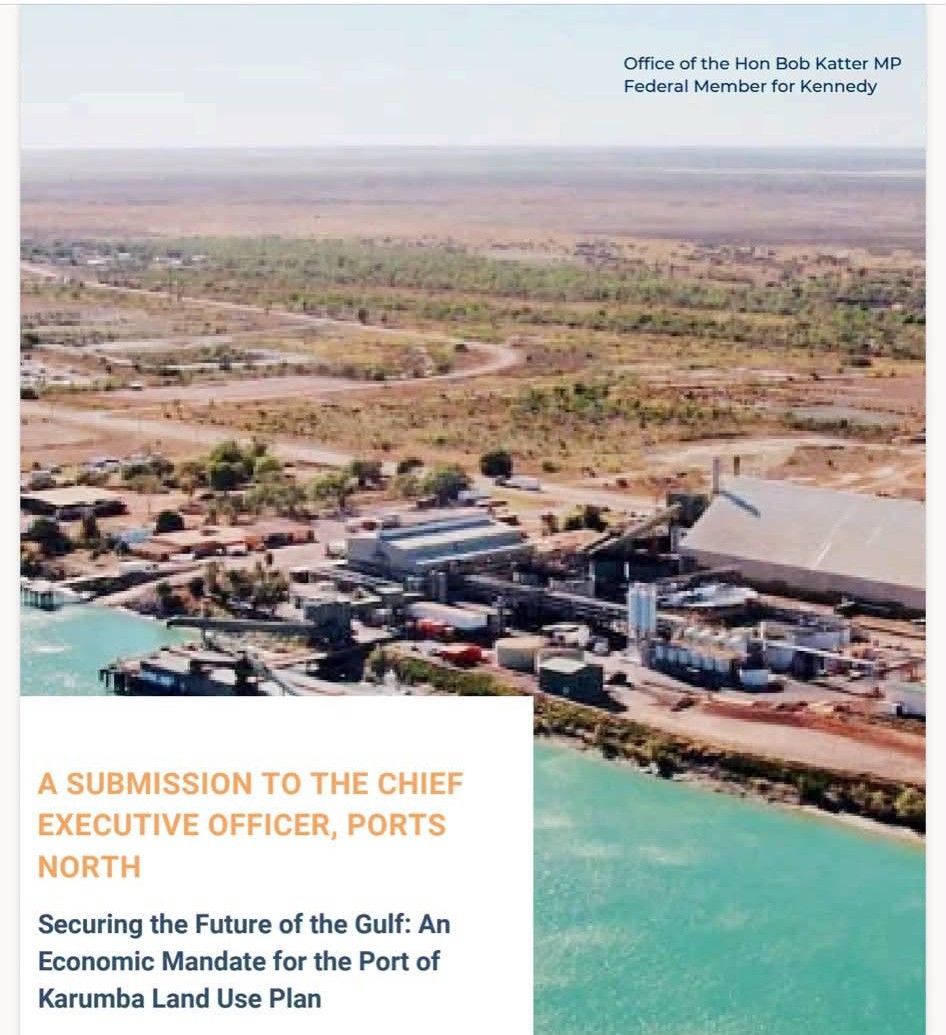
The Port of Karumba serves as the primary maritime gateway for the Gulf of Carpentaria, providing key access between our southern states and the essential Asian markets and beyond. The port is a stones throw from the North West Minerals Province, vast untapped volumes of fresh water, rich soils and our northern regional agricultural sectors. The future of the port must include serious upgrades to the road network that connect it these vital resources and the rest of Australia. This submission advocates for not only broad consideration of port access and users, but also for key Inland road networks to be placed on the National Land Transport Network (NLTN) to unlock long-term, ongoing Federal funding.
