Govt has transport operators running on fumes

April 6, 2022

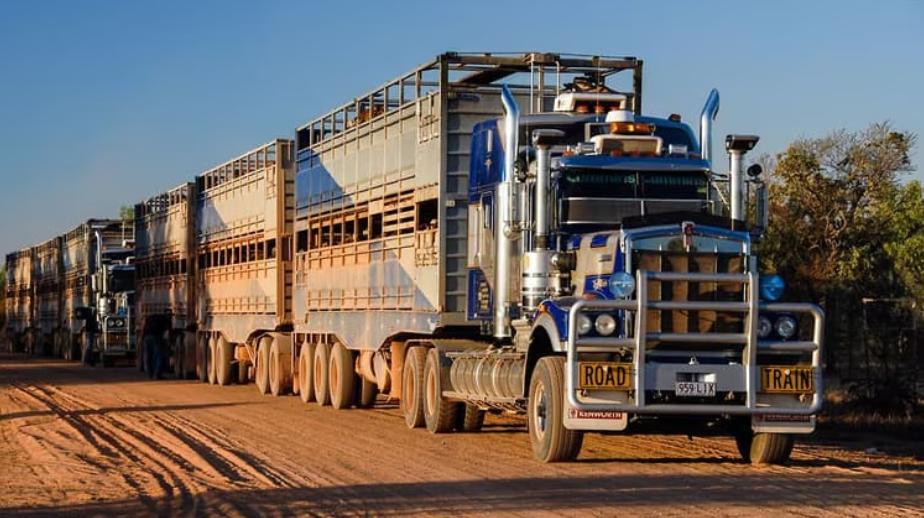
BOB Katter, Kennedy MP, has penned a letter to the Treasurer on behalf of the transport industry in his electorate who say Government has made a terrible error in judgement by reducing the fuel excise, and cutting the fuel tax credit simultaneously.


By removing the fuel tax credit for on-road users, and with the continuing increase in the price of petrol from the oil companies, Mr Katter said the transport operators were facing massive cash-flow and operational issues. 
“There is a serious issue unfolding across Australia, which is a direct consequence of the 22.1c fuel excise reduction implemented by the Government,” Mr Katter said.


“While at face value, the cutting of fuel costs by 21c at the bowser may seem to be a good thing for the Australian people, it is having a catastrophic impact on our transport and freight operators, as well as gouging our farmers and primary producers. 


“22.1c reduction in the fuel excise is not having the positive impact that the government anticipated, and our transport operators are calling for the fuel tax credit of 17.8c for on-road, and 44c for off-road, be restored.”


Mr Katter said that due the removal of the credit, many transport businesses will experience a huge reduction in cashflow, and they will be left with no choice but to increase their fuel levies for their suppliers, who then, will either pass that increase onto the retailer (who will then hike prices to the consumer), or they

will absorb the cost themselves.


“Our farmers will take the brunt of these fuel levies and they already on their knees, at the mercy of the giant supermarket chains in terms of the price they get paid for their produce. They have no ability to increase the price per carton in line with the increase in fuel levies coming from the transport operators because they are beholden to the price set by the retailers and so they will be the ones to absorb the cost.


“Not only has there been a 50 percent increase in fuel costs over the last 12 months, but there has also been a 160 percent increase in the price of fertiliser (urea), packaging costs have increased roughly 40-50 percent and chemicals are up 123 percent.


“We understand that everyone is doing it tough but punishing our vital transport operators after what they have already suffered, and continue to suffer from the critical AdBlue shortage, now 300 percent higher in price, is not acceptable. We need our trucks to feed and move our nation,” Mr Katter said. 

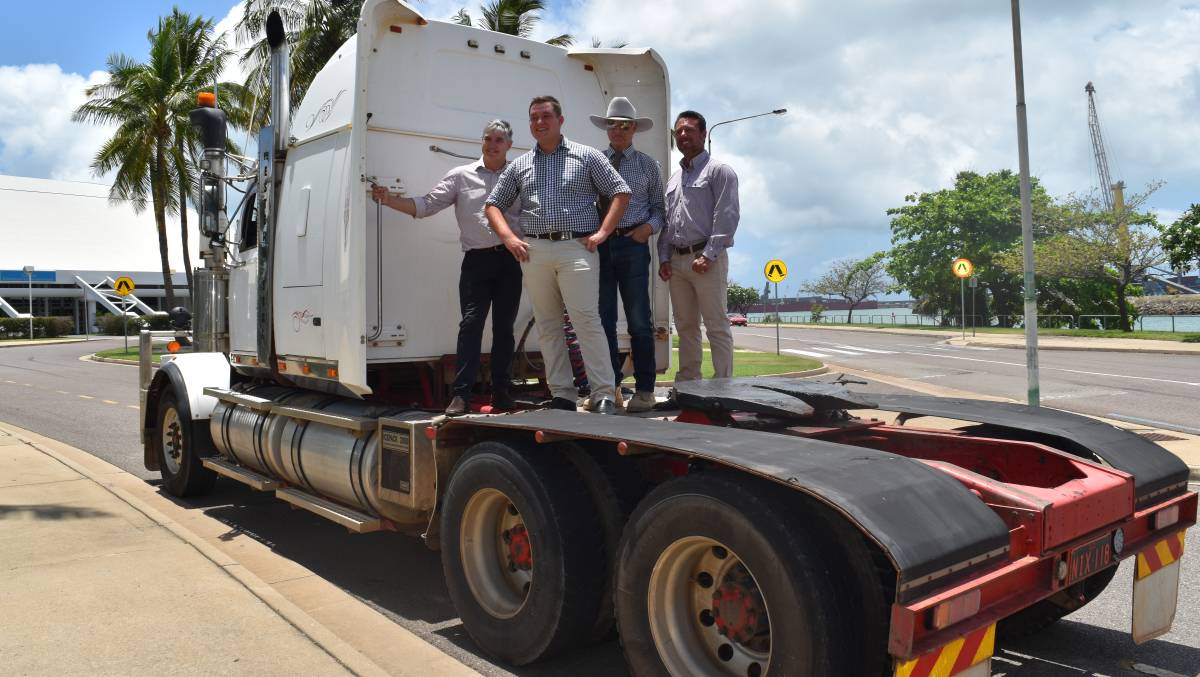
Leading North Queensland trucking company, Blenners Transport, said that the continuation of high fuel levies applied to all transported goods created an environment of exceptionally high inflation.


Owner, Les Blenner said, “This time last year, our fuel levy was around 6 percent but we’ve had to increase that to 21 percent.


“While the government gave us a 22.1 cent reduction in the fuel excise they also took away our on road fuel tax credit or 17.8 cents and as a consequence, the net benefit for a heavy vehicle operator was reduced to 4.3 cents.


“Unfortunately, BP, our fuel supplier, has advised the barrel price from last Monday to next Monday has increased 8.463 cents, so in real figures, our fuel price increased 4.16 cents.


 “MOPS is the Mean Oil Price Singapore, and when the price per barrel increases this will disproportionately affect regional Australia, particularly growers that have fixed price contracts with major retailers. 


"The higher cost of living will no doubt provide a launch platform for the Fair Work Commission to approve massive wages increases.


“What this has also done is allow transport companies the ability to claim only a small portion of fuel costs, while also allowing rail and mining companies (because their credits haven't been impacted) to continue to claim the majority of the fuel costs, thus creating an unfair playing field,” Les said.


-ENDS-  


By Kahla Kruger July 1, 2026
KAP Federal Member for Kennedy Bob Katter has welcomed the completion of the sale of Phosphate Hill, celebrating it as a major win for North West Queensland workers, industry and the future of Australian fertiliser production. Mr Katter said the announcement represented the culmination of years of relentless campaigning to keep one of Australia's most strategically important industrial assets operating. "This is wonderful news for North West Queensland," Mr Katter said. "For years we've been bashing the doors down, that if Australia wanted to keep industry alive, governments had to step in and secure a future for assets like Phosphate Hill." Mr Katter said the federal government’s Reserve Resource Policy had been instrumental in helping create the conditions for the sale. "Getting a Reserve Resource Policy in place has been one of the major achievements of my political life. We fought tooth and nail because Australia should never be paying world-leading prices for our own gas. "Our competitors in countries like the United States and Russia have access to affordable energy, while Australian manufacturers have been paying more than $16 a unit for gas.” Mr Katter said affordable gas was fundamental to the survival of the North West's industrial base. "Everything at Phosphate Hill depends on gas. It powers the plant and drives the chemical processes that turn our natural resources into the fertiliser. "Only a year or so ago we were staring down the barrel of losing one of Australia's biggest industrial centres, with the closure of copper and phosphate production threatening thousands of livelihoods across the North West. "This is an enormous relief for the workers, contractors, families and communities who never gave up. "I particularly want to thank the people of North West Queensland who stood together and fought for this outcome. They refused to accept that these jobs should disappear, and today their determination has been rewarded." Mr Katter said the focus must now be on ensuring Phosphate Hill has the affordable energy certainty needed to remain strong operation for decades to come.  -ENDS-
By Kahla Kruger June 25, 2026
Parliament is back and so is the fight for Australia's future. This week, Bob and Elise sit down in Canberra to tackle one of the country's most contentious issues: immigration. Was the Bondi tragedy a warning sign? Bob argues it exposed much deeper problems, and that Australia's political class has abandoned its duty to protect the nation. Plus, inside Bob's $300 billion plan to transform Australia from a country that spends money into one that makes it. Listen now!
By Kahla Kruger June 21, 2026
This week on Wisdom Mongrel Patriot, Bob hits the road and takes listeners deep into the heart of the Kennedy electorate to showcase the people, places and businesses that make Northern Australia tick. Our first stop is the tropical paradise of Mission Beach, where Bob sits down with one of the region's young entrepreneurs, Liam Johnson, owner of Scotties Bar and Grill. Liam shares the reality of starting a small business in today's Australia. Despite the challenges, he's chosen to back himself and invest in his community. Why would a young bloke take the risk? What keeps him going? And what does the future hold for regional small business? Along the way, Bob and Elise explore the wider Mission Beach region; one of Australia's true hidden gems. From pristine beaches and tropical rainforest to tourism, agriculture and local enterprise, they discuss why this corner of North Queensland continues to attract people looking for opportunity and a better way of life. And because no road trip with Bob would be complete without it, listeners are treated to another classic Bob serenade that proves once again that politics and music are never far apart in Kennedy. This week is a story about backing yourself, building something from scratch and having a crack when plenty of others wouldn't.  Pull up a stool, grab a cold one and join Bob as he takes Wisdom Mongrel Patriot on the road. 🎙️🍻🌴
By Kahla Kruger June 4, 2026
This week, Bob sits down with AgForce Queensland President Shane McCarthy, better known to mates and colleagues simply as "Sheep". In a frank discussion about the future of Australian agriculture, Sheep outlines the biggest challenges facing farmers today. He discusses the need for cutting through layers of red and green tape to ensure that producers can get on with the job of feeding the nation. The pair discuss the growing burden of regulation, the need for practical policy solutions, and why governments must start trusting farmers instead of tying them up in bureaucracy. They also tackle the escalating pest crisis affecting rural Australia, including the impact of pigs, wild dogs, wild cats and other feral animals and invasive species that continue to devastate livestock, crops and native ecosystems across the country. Along the way, Bob and Sheep share a few laughs, including a brief detour into the mystery of Bob's famously crooked nose, before reflecting on the homeland and values that shaped them both. It's a conversation about agriculture, common sense and the people who keep Australia fed. Listen now for a paddock-to-parliament discussion on farming, freedom and the future of regional Australia.
By Kahla Kruger May 28, 2026
28 May 2026: On World Blood Cancer Day today, Kennedy MP Bob Katter has welcomed the Federal Government’s announcement of strengthened funding for a major recruitment campaign to register hundreds of thousands more stem cell donors to be potentially called upon help save the lives of fellow Australians. In response to a question from Mr Katter in Parliament yesterday, the Health Minister confirmed Australia continued to hold one of the smallest stem cell donor registries of all developed countries – three years after vowing to expedite a significant increase in lagging donor registrations following representations by Mr Katter. The Minister also confirmed the Government’s call for tenders this week to establish a specialist stem cell donor registry and clinical service, to facilitate greater donor-recipient matches as the last hope for survivors. Mr Katter said the Life Saving List community campaigners had increased bone marrow donor registrants from 168,000 to 190,000 in the three years since the Health Minister noted Australia had not moved fast enough to help more blood cancer patients find donors. “In these three years, Australia has lost 18,000 lives – 20 people a day – including my nephew Liam,” he told Parliament before today joining community-based campaigners with the Parliamentary Group on Bone Marrow Donation to mark World Cancer Day in the Speaker’s Courtyard, where special guests from the Canberra Raiders demonstrated the quick and simple test to go on the register with just a cheek swab, or when donating blood. Along with Australian Red Cross Lifeblood and Stem Cell Donors Australia, Life Saving List campaigner Josephine O’Brien said she was grateful for the progress in the two years since the premature death of husband Liam, who remained steadfast in his commitment to growing the stem cell donor registry whilst fighting for his own life. Acknowledging the work of Lifeblood for the treatments Liam required daily thanks to the kindness of strangers donating, Mrs O’Brien said: “No family should have to carry the weight of finding a donor alone. When someone you love needs a stem cell match, you are already facing the hardest moment of your life.” She also paid tribute to the Canberra Raiders for their ongoing support with the “relentless efforts” of campaigners and Parliamentary Group on Bone Marrow Donation – including Mr Katter, Macarthur MP Dr Mike Freelander, Kooyong MP Dr Monique Ryan, Forde MP Mr Ted O’Brien, Lyons MP Hon. Rebecca White and their staff – who fought for the inclusion in 2023 of cheek-swab registrations as “a giant leap forward for Australia that would not have been achieved for many years without the force of Liam O’Brien behind it”. Mr Katter said the additional expansion of 17-year-olds to the list of eligible donors would increase the pool of potential registrants from which to recruit potential stem cell donors by several hundred thousand young Australians; and welcomed the Minister’s further advice that the successful tenderer to provide clinical services to match donors with patients, would be asked to consider whether the age limit be raised from 35-40 years.
By Kahla Kruger May 28, 2026
Josephine O'Brien joins Wisdom Mongrel Patriot on World Blood Cancer Day to share the deeply personal story behind the campaign that is transforming Australia's stem cell donor registry. After losing her husband Liam to blood cancer, Josephine has turned unimaginable grief into action, leading the fight to grow Australia's donor register and give other families the chance they never had. Bob Katter, his Chief of Staff Kahla Kruger, and Josephine discuss Australia's chronic shortage of stem cell donors, the progress made through the Life Saving List campaign, the importance of simple cheek-swab registrations, and why thousands more young Australians are needed on the register. This is a story of courage, persistence and hope, and a reminder that a single donor can mean the difference between life and death. Every Australian aged 17-35 can help. One cheek swab could save a life.
By Kahla Kruger May 25, 2026
Australia was once a country where an ordinary Australian could buy a home, raise a family and have the mortgage knocked over by 30. Today, young Australians are being sold a very different dream, a lifetime on the hamster wheel, saddled with million-dollar mortgages they may never escape.
By Kahla Kruger May 13, 2026
In this episode of Wisdom Mongrel Patriot, Bob Katter and Elise deliver a blunt dissection of the 2026 Federal Budget - and ask the question many in the bush are already asking: where exactly does Regional Australia fit into the nation’s future? Where does self-sufficiency fit? Where does the Australia we used to know and love fit?
By Kahla Kruger May 7, 2026
Bob Katter, KENNEDY MP, has attended commemorations for the Battle of the Coral Sea in Cardwell over the weekend, joining veterans, families, community members and local organisations in paying tribute to those who served during one of the most significant naval battles of World War II.P The Battle of the Coral Sea, fought in May 1942, marked a major turning point in the Pacific War and is widely recognised as the battle that helped halt the Japanese advance towards Australia. Mr Katter said commemorative events like the Cardwell service were critically important in ensuring Australians never forgot the sacrifices made by servicemen and women who defended the nation. “These men and women stood up when their country needed them most. Many never came home, and many others carried the scars of war for the rest of their lives,” Mr Katter said. “Events like this are about paying our respects and making sure younger generations understand the price that was paid for the freedoms we enjoy today. “Regional communities have always carried a very strong tradition of service. You see it right across North Queensland and I have spent untold hours in pubs talking to families who have served generation after generation in defence of this country.” Mr Katter also thanked organisers, veterans and volunteers involved in the commemorations for ensuring the legacy of Australia’s servicemen and women continues to be honoured. “As Australians, we have a duty to remember them. Ceremonies like the Battle of the Coral Sea commemorations keep that spirit of remembrance alive.” ENDS
By Kahla Kruger May 7, 2026
What started as a small idea tossed over a meat pie in a bakery in 1977, has has turned into one of the biggest drawcard events for North Queensland.